Turning Mergers Into Workplace Momentum
Mergers in Wisconsin often accelerate as summer winds down. Deals move from concept to execution, and leaders start asking hard questions about culture, space, and how everyone will actually work together. The numbers on the page may look strong, but if people do not feel at home in the new organization, that value can erode quickly.
This is where workplace strategy becomes as important as finance and legal work. A well-planned workplace can reduce anxiety, support new ways of working, and show people the future they are building together. A poorly planned one can create stress, confusion, and a gradual increase in turnover and disengagement.
An experienced workplace design consultant in Wisconsin helps turn merger activity into forward momentum. This is not about cosmetic choices or simply securing a larger conference room. It is about aligning space, culture, and operations so the investment you made on paper shows up in real performance, productivity, and retention.
Our own story at Coakley Brothers speaks to that balance. We began serving Milwaukee in 1888, supporting the city's early commercial growth, and today we work out of the historic Water Tower Building, a local landmark that has evolved alongside the region's economy. The structure's preserved character, combined with contemporary workplace systems inside, reflects how we view every project: honor the past while enabling what comes next. That same idea, respect the roots and design for the future, sits at the heart of successful merger workplaces.
Why Mergers Demand a Strategic Workplace Plan
When two organizations come together, the space they share is one of the first things everyone experiences. If it is not planned with care, friction shows up quickly in slower decision making, reduced collaboration, and uncertainty about the new culture.
A strong merger plan connects deal strategy with space strategy from the start. During due diligence, leaders should be looking at:
- Current and future headcount by function
- Real estate commitments and sublease options
- How hybrid work will affect seat counts and schedules
- Where teams need to sit near each other to do their best work
Planning early for adjacencies, meeting rooms, focus areas, and hybrid guidelines cuts down on guesswork later. It also reduces downtime when the merger closes and budgets are set for fall and winter, helping the combined organization reach steady-state productivity faster.
Culture also becomes tangible in physical form. Layout, amenities, and visual cues can blend two groups into one new story. Shared commons areas can bring people from both sides together for informal connection. Brand elements from each legacy company can be layered into graphics, materials, and signage so no one feels erased.
Thoughtful cultural integration can include:
- Co-locating once-separate teams around shared workflows
- Creating neutral collaboration zones instead of "old company" wings
- Weaving both sets of colors, patterns, or taglines into the new space
- Designing flexible areas for cross-functional project work
Risk reduction is another reason to treat workplace as strategy, not a secondary concern. With a clear plan, you can:
- Limit temporary space and short-term leases
- Avoid last-minute, high-stress move weekends
- Reduce confusion about where people sit and how to use new spaces
- Get teams productive within the first 3 to 6 months instead of waiting years for full integration
A strong workplace plan turns merger day from disruption into a clear starting line, supporting faster integration and a more cohesive culture.
The Role of a Workplace Design Consultant in Wisconsin M&A
A workplace design consultant in Wisconsin brings local insight and broad capability to this kind of change. That local knowledge matters more than many leaders expect.
A consultant rooted here understands:
- Regional labor markets and commuting patterns across Milwaukee, Madison, Fox Valley, and beyond
- Seasonal construction timing and how it affects schedules
- Local building codes, permitting, and union requirements
- Trusted vendor networks for furniture, finishes, and specialty trades
When late-summer deals intersect with campus reopenings and busy construction calendars, this insight keeps plans practical, budgets aligned, and timelines achievable.
From there, the consultant translates business objectives into places where people can do their best work. We sit with your executives, HR, and facilities leaders and ask focused questions: Where will growth come from? How do you want teams to collaborate? What does hybrid work really mean for your managers and staff? How should space support talent attraction and retention in this market?
Those answers become:
- Floor plans tied to workflows and business priorities, not just square footage
- Furniture strategies that support focus, collaboration, and flexibility
- Technology-ready spaces that make meetings effective for in-person and remote staff
- Amenity zones that demonstrate commitment to employee experience and well-being
Design is only one part of the job. The real value emerges when design and logistics operate under one coordinated plan. Programming, interior design, procurement, construction support, and move management should all work together as an integrated continuum. Fewer handoffs mean fewer surprises, which keeps your merger milestones and your teams' productivity on track.
From Blueprint to Move-In Day and Beyond
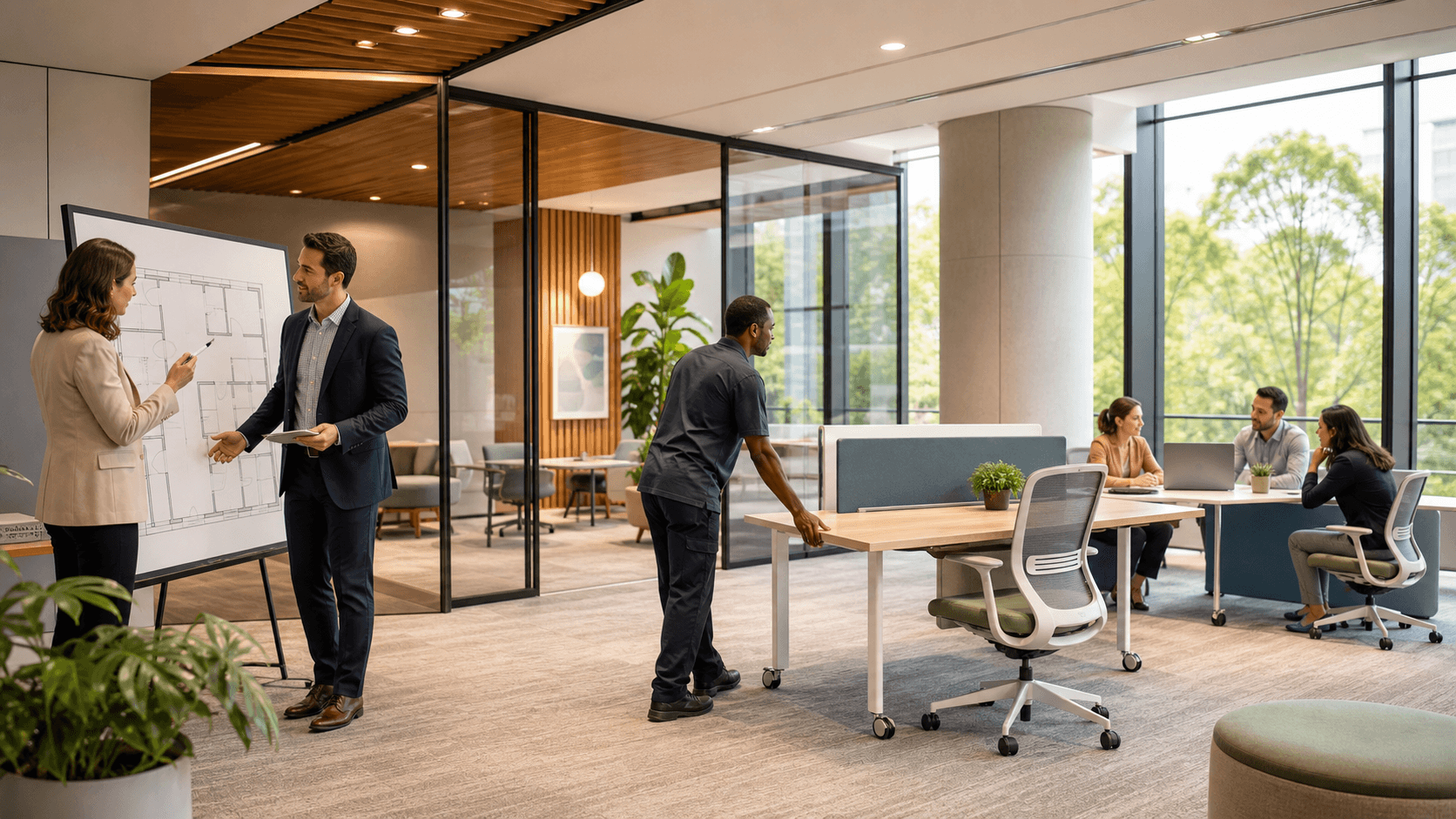
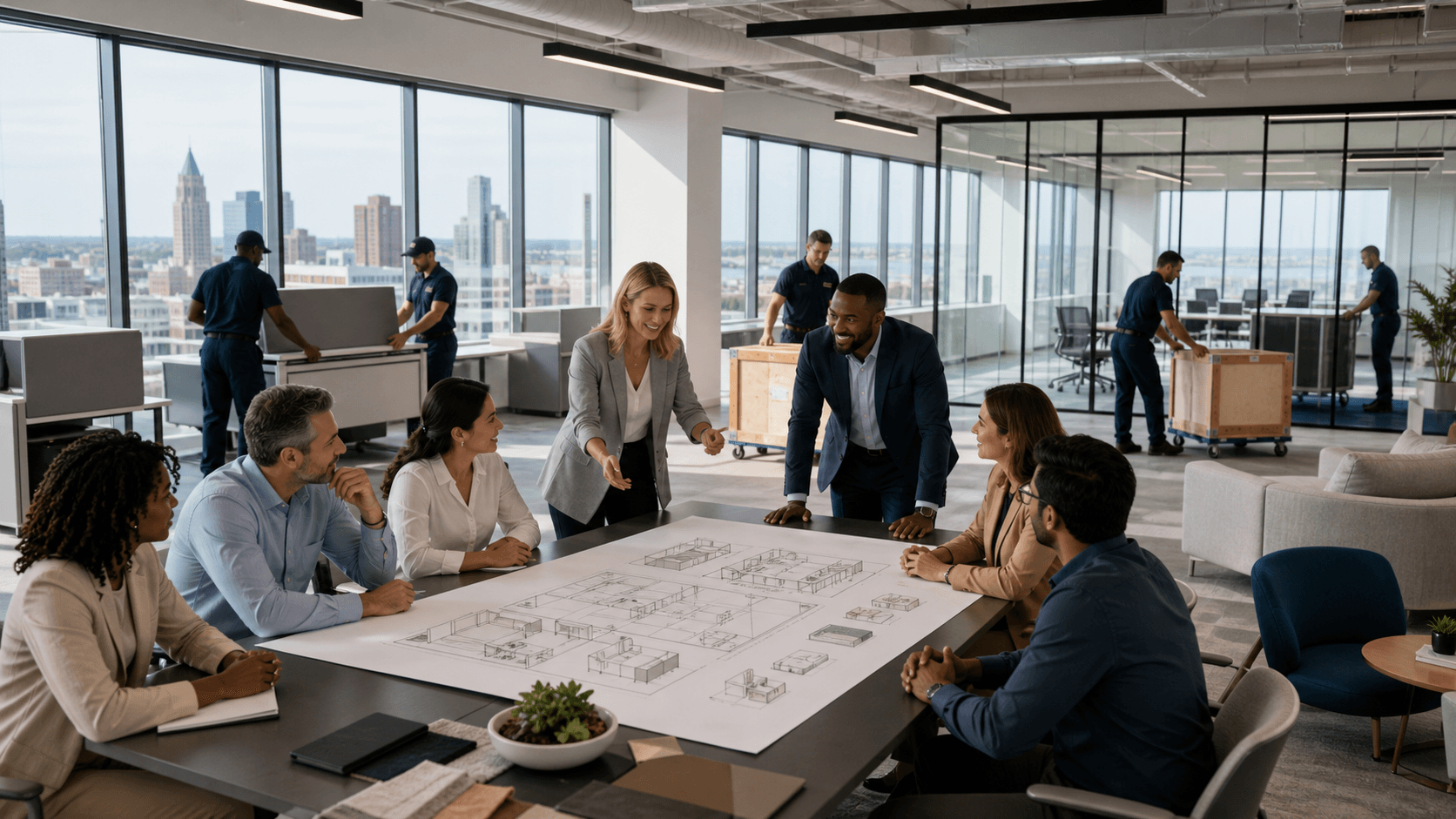
Turning drawings into a ready workplace takes careful coordination. A full-service partner maintains one line of sight from early planning through move-in and the ongoing operation of your assets.
That kind of integrated planning covers:
- Workplace strategy and programming
- Interior architecture and finish choices
- Furniture selection, ordering, and installation
- Construction coordination with landlords and general contractors
- Move sequencing and day-one readiness
When IT, security, and building ownership are brought in early, you avoid last-minute scrambles for access control, data drops, or power changes as fall go-live dates approach.
Logistics are just as important as layout. Professional move planning can phase relocations so operations stay online while spaces flip. Asset tracking helps you know what you own, where it is, and how it moves from one site to another. Sensitive equipment, archives, and confidential materials need secure handling so you protect both people and data.
After move-in, the work continues. Merged teams often shift once they start working together in real time. Post-move support should include:
- Reconfigurations as teams grow or combine further
- Ongoing furniture and asset management for multiple sites
- Data-driven adjustments to layouts based on how spaces are actually used
Treating the workplace as an ongoing evolution gives your new organization room to adapt as strategy changes, while protecting the long-term value of your real estate and furniture investments.
Honoring Legacy While Designing the Future Workplace
Mergers are emotional. People bring pride in what they have built and concern about what they might lose. Space can help tell a new, shared story that respects that history and signals a confident future.
Physical places can weave those stories together through:
- Art that reflects both organizations and the communities they serve
- Architectural details that echo past offices, product lines, or foundational innovations
- Storytelling walls that show key moments from both legacies
- Meeting room names that honor important places, values, or inventions
The Coakley Brothers Water Tower offers a helpful model. It is a historic Milwaukee landmark that has been renewed for contemporary work. The integrity of the original structure remains, while the interior supports modern teams, tools, and ways of working. Over more than a century, our industry has evolved from simple moves and storage to comprehensive workplace solutions; the Water Tower embodies that evolution, preserving what matters while embracing new demands.
In the same way, merged companies can retain the elements of their past that define them, innovations, community ties, and culture, while using the workplace to communicate a clear step into the future.
Supporting people through change extends beyond furniture and finishes. An experienced workplace design consultant in Wisconsin can help with:
- Town halls and space previews that show people what is coming
- Pilot areas where teams can test new ways of working
- Clear wayfinding so new spaces feel intuitive from day one
- Feedback loops that turn staff input into measurable adjustments
When people feel informed, listened to, and able to navigate their new environment, they are more likely to engage with the combined organization and contribute to its success.
Making Your Next Merger Work Harder for You
Workplace is not just a cost line item after a deal. It can be a significant driver of merger success when design, logistics, and long-term asset management move in step with your business plan. With an integrated, locally grounded partner, a complex merger in Wisconsin becomes a smoother, faster, and more productive transition into what comes next.
By aligning deal strategy with workplace strategy early, you give your combined teams a clear signal of where the organization is headed and how they fit within it. As summer fades and attention turns to fall budgets and year-end results, a well-planned, well-executed workplace can help new teams feel ready, connected, and proud of the future they are building together, while delivering the performance, collaboration, and retention outcomes your merger was designed to achieve.
Get Started With Your Project Today
If you are ready to rethink how your space supports productivity and culture, we are here to help guide the process from first idea to final installation. As your trusted workplace design consultant in Wisconsin, Coakley Brothers will collaborate with your team to create environments that truly fit how you work. Share a few details about your project and timeline, and we will follow up with tailored recommendations and next steps. To begin, simply contact us so we can discuss what you want your workplace to achieve.